How much does VR training cost?
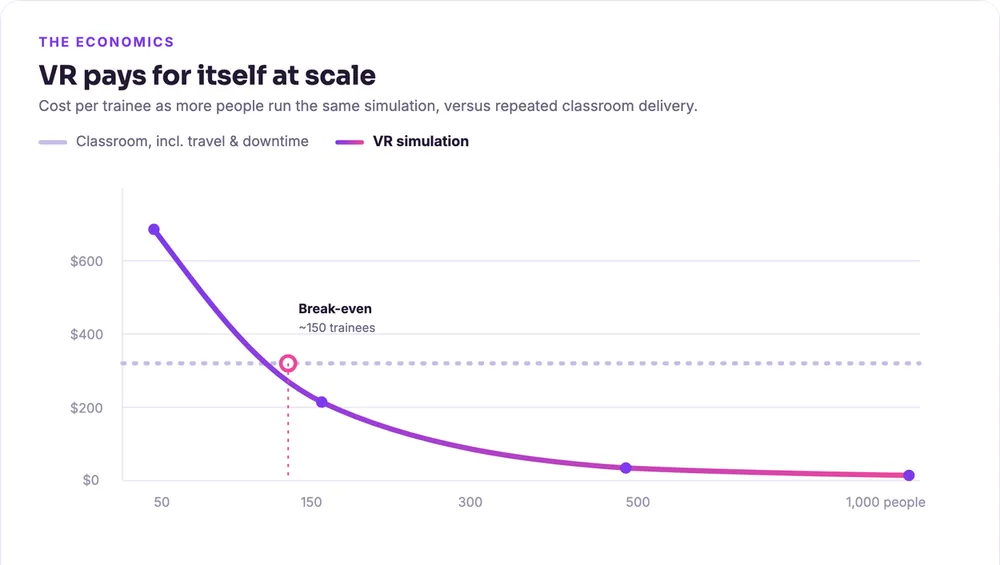
A custom VR training simulation typically ranges from $15,000 to $80,000 depending on environment complexity, number of scenarios, and interactivity level. Hardware costs are separate (standalone headsets like Meta Quest run $300 to $500 per unit). The per-person cost drops significantly at scale: a $50,000 simulation used by 500 people is $100 per person, often less than the cost of one day’s classroom training including travel and downtime.
What hardware do we need?
For most corporate training, standalone headsets (Meta Quest 3 or similar) are the practical choice: no PC required, easy to deploy, and sufficient quality for training scenarios. For applications requiring higher visual fidelity (architectural walkthroughs, detailed equipment simulation), PC-tethered headsets offer more power. We advise based on your specific needs.
Can VR training be tracked in our LMS?
Yes. Our VR simulations support xAPI (Tin Can) standard, so all performance data, completion, scores, time, decisions, and error patterns, flows into your existing LMS alongside your other training data.
How long does development take?
A single scenario typically takes 8 to 14 weeks from design to deployment. A multi-scenario programme with a shared environment can take 16 to 24 weeks. We run content development and hardware procurement in parallel to compress timelines.
Do people get motion sickness?
Modern standalone headsets and well-designed experiences have largely solved this. We follow established comfort guidelines: no artificial locomotion (the user stays in place or teleports), high frame rates, and short sessions (typically 10 to 20 minutes). In our deployments, discomfort rates are consistently below 5%.
Is VR just a gimmick?
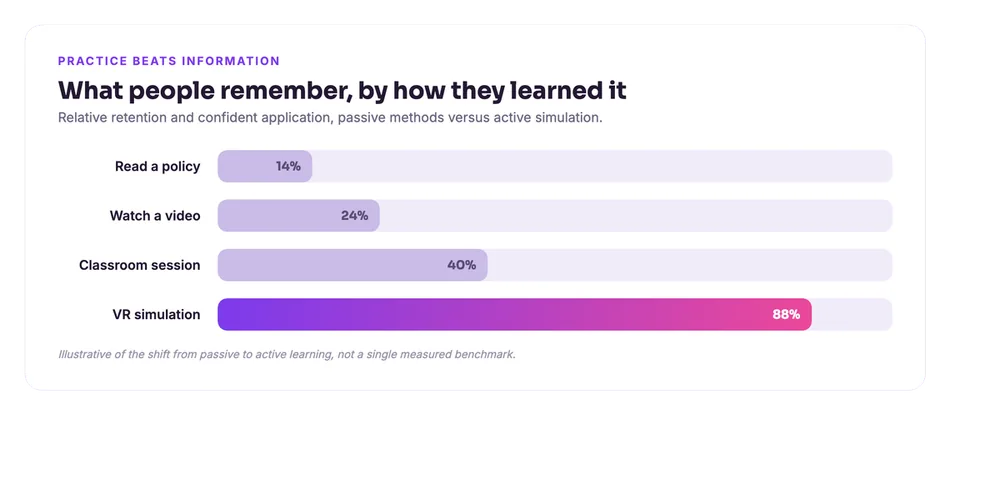
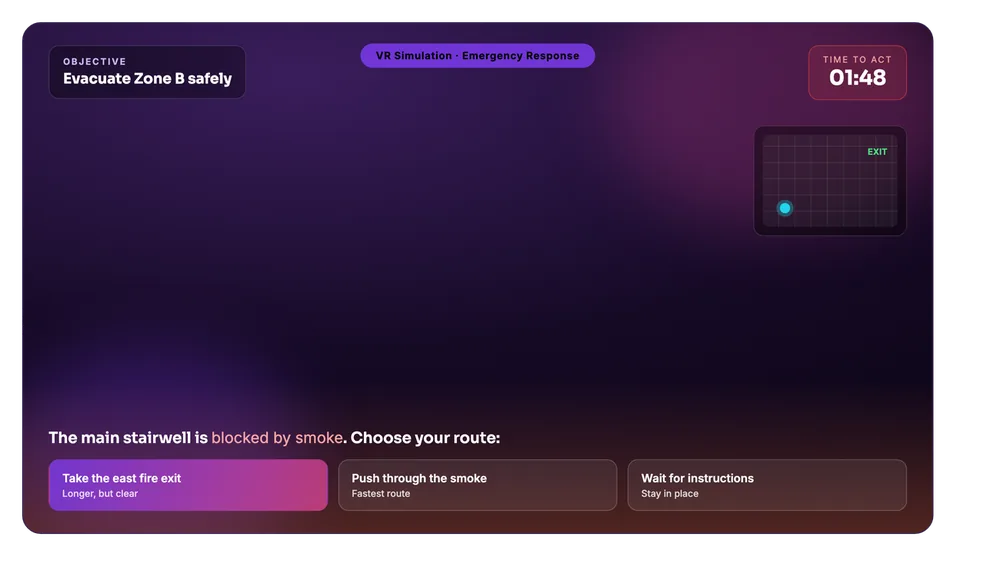
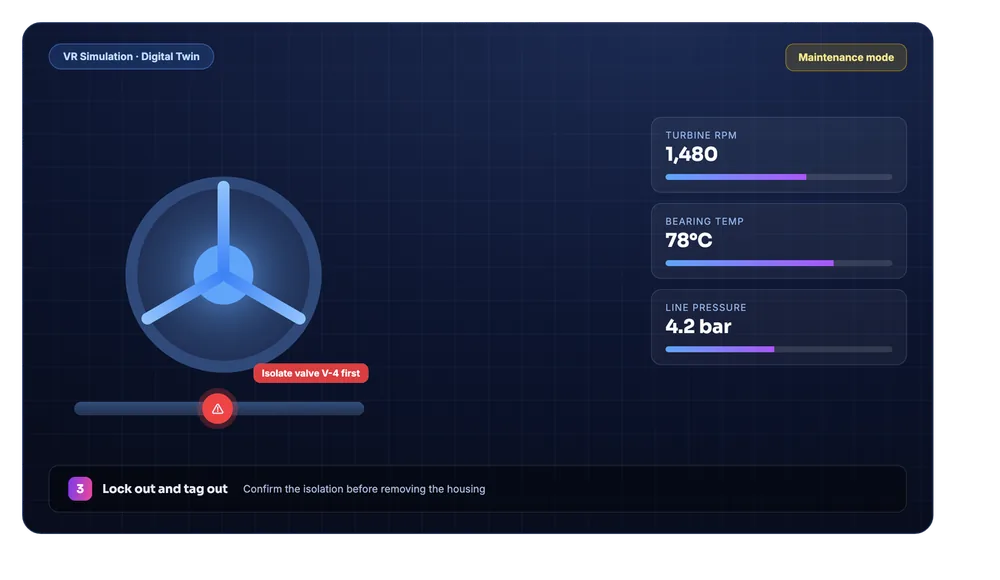
For generic compliance training, yes, it would be. That’s why we don’t recommend it for that. VR earns its value in specific conditions: high-risk scenarios, performance under pressure, spatial and procedural training where practice beats information. When those conditions apply, the evidence is strong. When they don’t, eLearning is a better investment, and we’ll say so.